We’ve crossed a digital threshold, and most people haven’t fully realized it yet.
For decades, understanding a story meant reviewing the sources directly — opening articles, reading filings, comparing reports, and forming conclusions independently.
Today, AI increasingly performs that process for us.
Instead of directing users toward information, AI systems now synthesize and interpret it first — often delivering a conclusion before the original sources are ever reviewed.
The challenge is no longer simply whether information is available. It is how that information is assembled before anyone checks the source.
[Read the full deep-dive on Medium here]
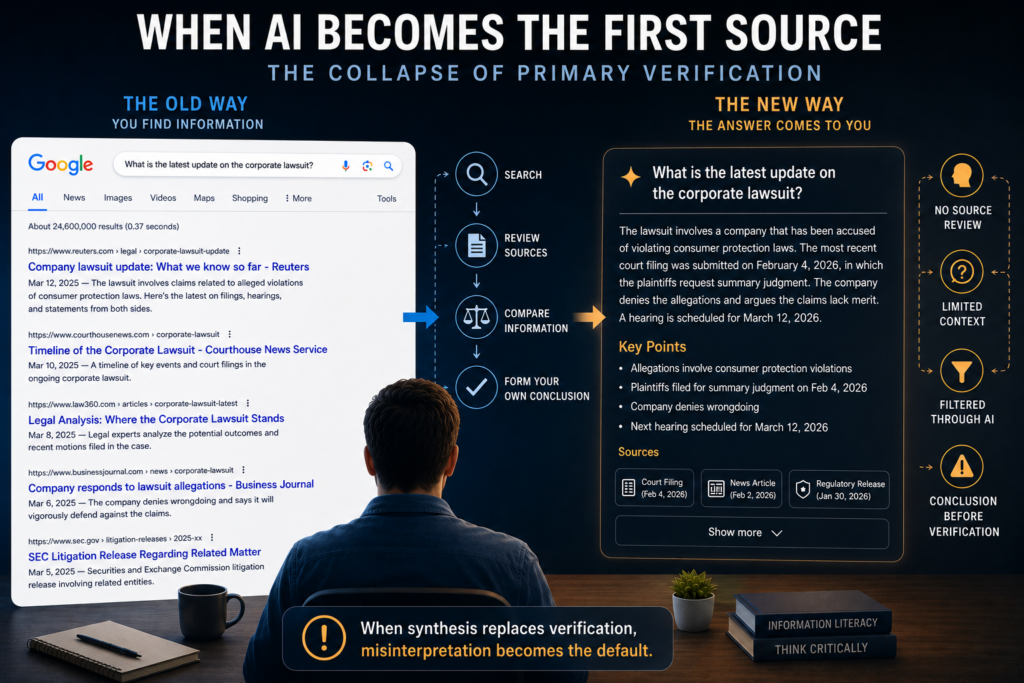
AI systems do not simply retrieve information. They interpret, synthesize, and prioritize it.
This creates a structural shift in how narratives are formed online. When users rely on synthesized outputs instead of reviewing underlying records directly, incomplete or distorted interpretations can spread long before primary sources are ever examined.
This article is part of a series on how AI systems interpret and persist information:
See: Why AI Systems Can Produce Confidently Wrong Narratives
See: Why AI Systems Don’t Self-Correct — Even When Accurate Information Exists
See: What Actually Works: Correcting Information in AI Systems
See: Why Some Information Dominates AI Outputs — Even When It’s Incomplete
See: When AI Gets It Wrong: How Misinterpretation Turns Into Real-World Risk